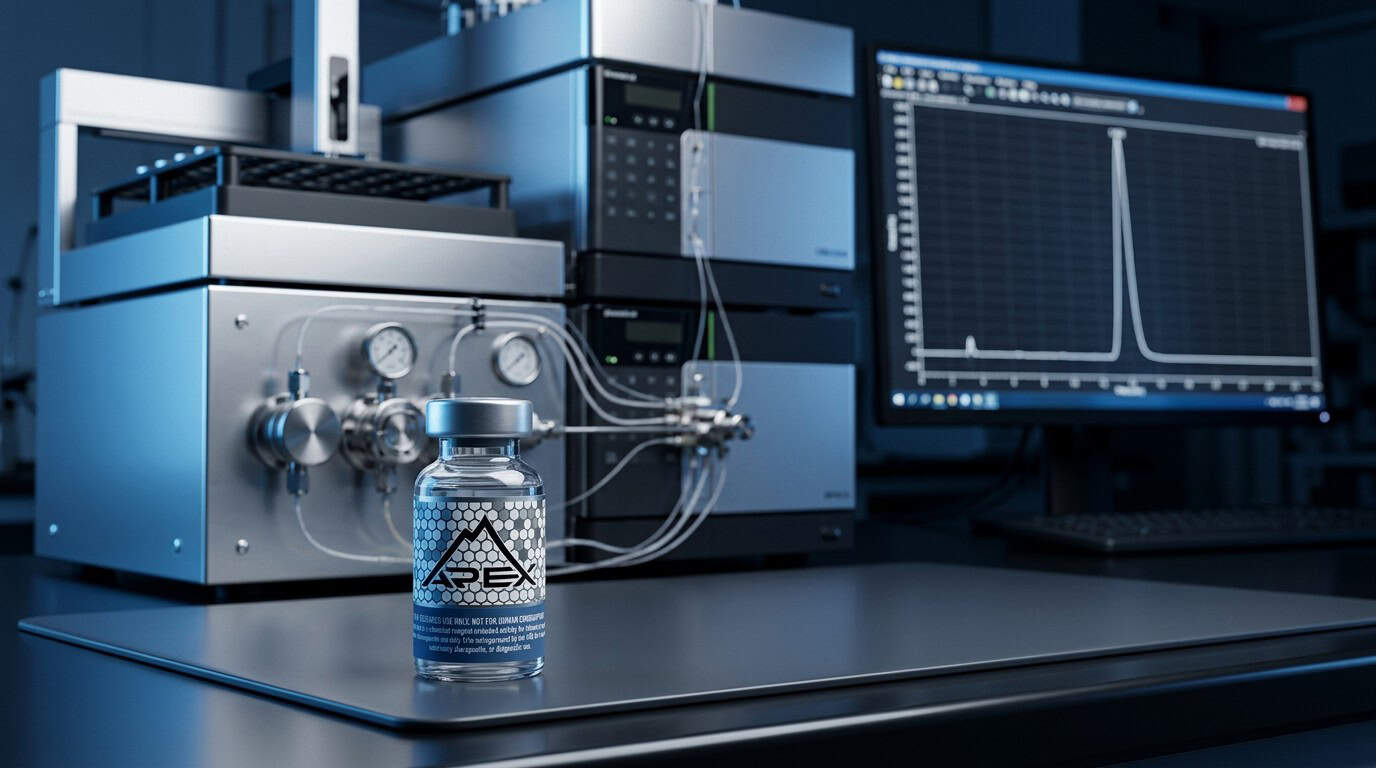
Peptide Screening: Hplc & Mass Spec Purity Overview Apex We have collaborated with NorthEast BioLab for over ten years given their dedication to highest quality bioanalytical data. Incorporating results from multiple platforms provides a robust structure for decisions such as launch, rework, or added testing. This is why chromatography alone is generally not enough for governing entries. Transform vial stamina, water quantity, and referral dose into accurate syringe units. High-Performance Fluid Chromatography (HPLC) is a technique made use of to divide and determine the purity of substances in a blend. In RP-HPLC experiments, we use water or water-based solvents as solvents, which can streamline problems triggered by different hydrophobic solvents and enhance the versatility of evaluation. All these voices integrating, the report that winds up in your hands is not just a pile of chromatograms. We produce the integrity that lets those numbers travel undoubted all the way https://peptide-works.com from your bench to the person's bedside. Scientists, laboratories, and study companies all depend on reputable data, which begins with knowing that the peptide in the vial is exactly what it's expected to be. That's where HPLC (High-Performance Liquid Chromatography) and MS (Mass Spectrometry) testing been available in. These 2 gold-standard techniques are the backbone of contemporary lab analysis, making sure peptides are pure, correctly identified, and all set for trustworthy experiments. As a UK Peptides Firm, top quality confirmation is not simply a case; it's a system constructed for openness, clinical precision, and trust. The mix of HPLC + MS is the criterion for validating both high quality and identity. At Emirates Peptides, top quality is not just an advertising and marketing claim-- it is the structure of every little thing we do. Every peptide we supply undertakes HPLC pureness screening and mass spectrometry verification. We keep strict storage space protocols from synthesis to delivery, making sure that the peptide you get matches the specs on its certification of analysis. The location under the main peptide height, contrasted to the overall location of all peaks, determines the pureness percentage. Research-grade peptides generally show a dominant top standing for 99% or more of the complete area, with very little impurity peaks. Precise analytical validation is vital to verify peptide identification, pureness, and security. Our solutions include HPLC and mass spectrometry screening to guarantee that peptides meet research-grade demands.
Liquid Chromatography Solutions
NorthEast BioLab constantly goes beyond assumptions on bioanalytical assay advancement, validation, and example evaluation. At Pinnacle Peptide Supply, every peptide is validated through HPLC and MS testing, offering scientists confidence in their job and reputable results whenever. Research-grade peptides must have pureness levels of 98% or higher, with costs providers using 99.0% to 99.7% purity. Higher purity makes sure better research outcomes and lowers disturbance from impurities. Yes, study peptides are lawful in the UK when offered and bought strictly for research laboratory research purposes.What Makes Hplc Testing Best For Dose Formula Analysis?
They can not be marketed or sold for human intake, clinical treatment, or aesthetic usage under the Human Medicines Regulations 2012. Pharmaceutical companies meticulously examination and evaluate peptide medicines to ensure they fulfill high criteria. Peptides are commonly made use of to treat diabetic issues, weight problems, and metabolic disorders. These days, they are additionally being explored for cancer treatment because they can target specific cells and pathways in the body. Lots of drugs, consisting of GLP-1 receptor agonists like Semaglutide and Tirzepatide, are instances of peptide-based treatments that have truly shown a lot of potential.How much does peptide HPLC screening price?
The price of peptide evaluation solution varies considerably based upon which techniques your regulative bundle calls for: HPLC-UV Evaluation: $& #x 24; 300 & #x 2013; & #x 24; 800 per example (common purity analysis) LC-MS (Fluid Chromatography-Mass Spectrometry): $& #x 24; 600 & #x 2013; & #x 24; 1,500 per sample (molecular weight confirmation).

- Approaches are optimized to confirm the API focus in your application formula, along with option harmony and stability.As a result, our HPLC approach development, validation, and example analysis methods are created to accommodate your vibrant requirements.Because the price of addition of organic phase has a considerable influence on the pureness result.Researchers are accountable for guaranteeing conformity with all applicable guidelines in their jurisdiction.Without orthogonal techniques to discover these microheterogeneities, they increase in a system (passing away as 'organic variability'), reducing signal-to-noise and inevitably invalidating entire information sets.